The message behind the Trump Administration’s new food pyramid and updated dietary guidelines is clear: “Eat real food,” in the words of Health and Human Services Secretary Robert F. Kennedy Jr. The latest guidelines urge Americans to prioritize proteins, healthy fats, and produce while avoiding highly processed foods.
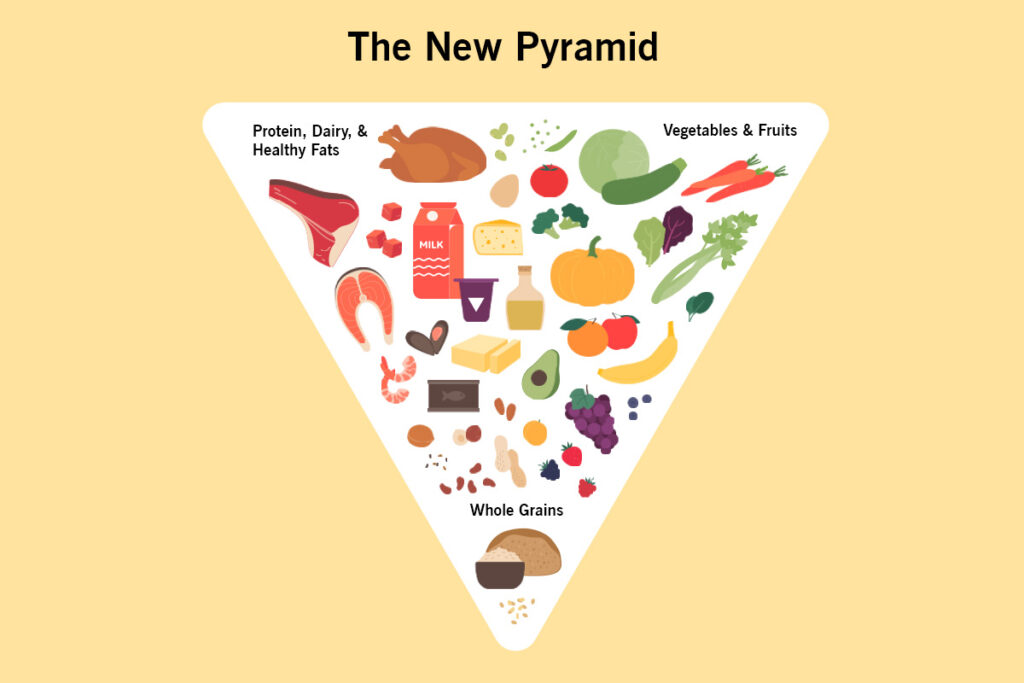
This dietary overhaul marks “the most significant reset of federal nutrition policy in history,” said Kennedy, who introduced the new guidelines in early January. Replacing the previous MyPlate recommendations, the familiar food pyramid has returned, but flipped upside down—with high-quality protein, full-fat dairy, healthy fats, fruits and vegetables at the top, and whole grains minimized on the bottom.
According to a federal fact sheet, these “common-sense, science-driven” dietary guidelines put “real food back at the center of health,” as part of Kennedy’s promise to “Make America Healthy Again.” But for oilseed processors, these changes present both challenges and opportunities.
While some of the rhetoric around seed oils has raised concerns from oilseed industry experts, the inverted pyramid’s emphasis on meat and dairy products is expected to drive increased demand for soybean meal, a primary byproduct of oilseed crushing. Meanwhile, the focus on healthy fats could open doors for certain mechanically-pressed specialty oils.
Here’s what oilseed processors need to know about RFK’s new food pyramid.
Protein takes center stage
The new dietary guidelines sharply depart from past recommendations that favored carbohydrates over proteins. Now, high-quality proteins—including red meat, poultry, eggs, seafood and full-fat dairy—take priority in every meal, with a recommended intake of 1.2-1.6 grams per kilogram of body weight per day, doubling the previous target of 0.8g/kg.
This shift is expected to spur increased livestock and dairy production as consumers seek animal-based proteins. This is good news for oilseed processors, since soybean meal—the protein-rich byproduct of oil processing—is the dominant feed ingredient for cattle, pigs, and poultry. As meat and dairy output rise to align with the updated guidelines, the demand for high-quality soybean meal should follow suit.
The National Oilseed Processors Association (NOPA) highlighted this connection in its response to the new food pyramid: “The oilseed value chain also supports the production of affordable meat, dairy, and eggs. The protein ingredients (meal) produced from oilseeds are a key component of livestock diets, allowing farmers and ranchers to deliver cost-effective meat, milk, and eggs to American families. Without strong demand for vegetable oils, these protein ingredients become less available, limiting production and increasing costs across the food system.”
So, to NOPA’s point, how will these guidelines impact the demand for vegetable oils?
The new food pyramid’s stance on seed oils
Previous dietary guidelines suggesting minimizing—or altogether avoiding—full-fat dairy and other fats, including saturated fats. The new food pyramid takes a new stance, recommending three daily servings of full-fat dairy and encouraging consumption of healthy fats, effectively “ending the war on saturated fats,” in Kennedy’s words. Although saturated fat is still capped at 10% of daily caloric intake, healthy fats from whole-food sources—such as nuts, seeds, and avocados—now join protein and dairy at the top of the pyramid.
The guidelines urge Americans to use cooking oils that contain essential fatty acids, such as olive oil, butter, or beef tallow. While the guidelines highlight the importance of plant-based proteins, including soy, its appendices question the process of oil extraction—singling out seed oils like soybean oil for further research.
Kennedy has previously criticized seed oils as poisonous, calling them “one of the most unhealthy ingredients” and “one of the worst things you can eat” in one interview. However, nutrition experts point out that Kennedy and other seed oil opponents are conflating seed oils with other harmful ingredients often found in ultra-processed foods or, as the guidelines refer to them, “highly processed foods.”
In fact, seed oils often contain fatty acids associated with lower risk of chronic diseases like cardiovascular disease, heart attack, stroke, and diabetes. The negative buzz surrounding seed oils may also spawn from the assumption that all oils are extracted using chemical solvents like hexane—overlooking chemical-free mechanical extraction processes that use brute force to extract oil, retaining most of the natural nutrients.
These misunderstandings have prompted concern from industry groups like NOPA and the American Soybean Association.
“Soybean oil and soy protein play a critical role in the health and nutrition of Americans,” responded ASA president and Ohio farmer, Scott Metzger. “We remain deeply concerned by the rhetoric and selectively cited studies regarding the health and safety of soybean oil in DGA supporting material. We look forward to continuing our work with the administration as we educate MAHA Commission leadership on the health benefits of soy-based foods and soybean oil.”
Redefining the dietary guidelines for healthy fats
The new food pyramid’s focus on healthy fats presents potential for specialty seed oils such as sunflower, flax, and sesame, which are rich in polyunsaturated fatty acids, antioxidants, and other beneficial compounds.
Mainstream research supports this balanced view of healthy fats. Studies from institutions like Johns Hopkins and the American Heart Association link polyunsaturated fats (which are abundant in many seed oils) to lower cholesterol, better metabolism, and reduced cardiovascular risk.
Expeller-pressed versions of specialty seed oils amplify these health benefits by avoiding chemical solvents while preserving natural flavors, nutrients, and bioactive compounds. Unlike solvent extraction, which uses hexane to separate fats from solid seed meal, mechanical pressing delivers a minimally processed product that fits seamlessly into the framework of these dietary guidelines, offering healthy fats with no artificial additives. As demand increases for these “real” ingredients, oilseed processors equipped for mechanical extraction are poised to benefit.
While questions around refined seed oils warrant ongoing research, the overall emphasis on animal protein and dairy positions oilseed processors for growth through increased soybean meal production to supply livestock feed. Meanwhile, mechanically pressed specialty oils offer a healthy path forward by capitalizing on consumer preferences for minimally processed fats.
If nothing else, the new food pyramid presents an opportunity for oilseed processors to innovate and educate—highlighting the vital role of expeller-pressed oilseeds in producing affordable, protein-dense animal feed and high-quality, chemical-free edible oils. By investing in mechanical pressing systems, processors can thrive in this new era to help “Make America Healthy Again.”
Still wondering how these dietary guidelines could affect your operation? Contact Anderson International today.