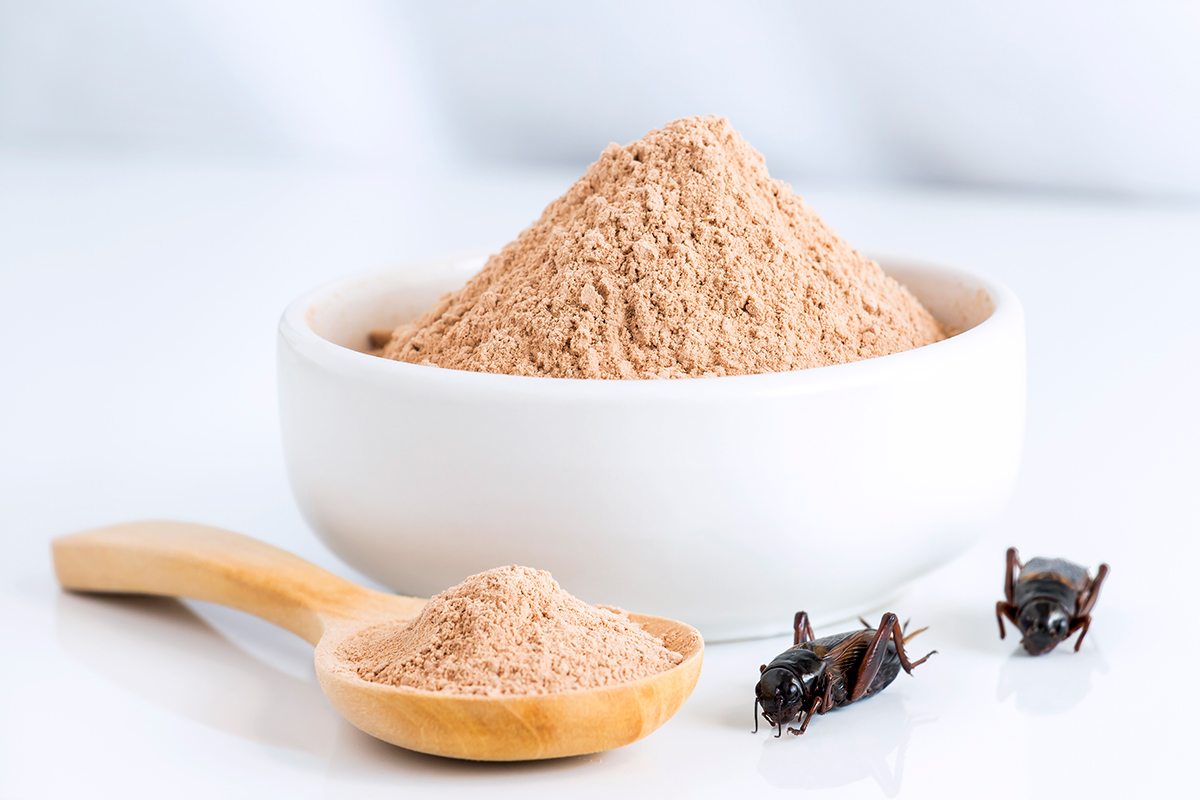
As the world population continues to rapidly expand, the demand for sustainable food sources intensifies. With the population projected to approach 10 billion people by 2050, some estimates suggest that global agricultural production will have to increase by 70% to meet these needs. However, the amount of arable land available to produce traditional meat and plant-based proteins is limited—pushing producers to consider alternative sources instead. Edible insects have emerged as a promising solution, offering a steady supply of insect protein to sustain the global appetite.
Although eating insects, or “entomophagy,” is rare in most developed countries, bugs have served as snacks and even delicacies in developing countries for tens of thousands of years. According to the Food and Agricultural Organization (FAO) of the United Nations, at least 2,000 insect species are regularly consumed by 2 billion people in more than 100 countries across Asia, Africa, and the Americas. The FAO has encouraged eating bugs since 2013, when it released a report promoting insects as a sustainable and nutritious alternative to resource-intensive meats.
Although insect protein presents several benefits for human consumption and animal feed, several hurdles stand in the way of its widespread adoption. Weighing the pros and cons of edible insect production is key to understanding its potential.
Key benefits of insect protein
Compared to conventional farming of livestock and crops, insect protein offers plenty of advantages. These include:
- Efficient production
Insects grow and reproduce rapidly, without taking up much space—allowing for scalable farming in compact areas. Thanks to their incredible physiological efficiency, insects require significantly fewer inputs than traditional livestock or row crops. An FAO report suggests that crickets have a feed conversion twice as efficient as chickens, four times more efficient than pigs, and 12 times more efficient than cattle. In fact, insects feed on food scraps and manure, which can help reduce waste. And their waste, known as frass, can be used as fertilizer to increase rapeseed yields by up to 25%.
- Environmental sustainability
As tiny micro-sources of protein, edible insects use a fraction of the land, water, and raw materials needed to cultivate soybeans or cattle, and produce far less carbon emissions in the process. One hectare (2.5 acres) of land can produce one metric ton of soy, while the same area could produce nearly 140 metric tons of insects—cutting back on deforestation to produce more protein with less environmental impact.
- Nutritional value
Insects serve as a rich source of protein, providing up to 60 or 70 grams of protein per 100 grams of bugs, compared to only 27 grams of protein per 100 grams of beef. On average, insects contain up to 60% protein, which is higher than most plant protein sources, including soybeans. Some crickets even provide a complete protein source, containing essential amino acids at levels similar to soy.
Additionally, edible insects like grasshoppers, crickets, and mealworms contain higher concentrations of minerals such as iron, zinc, and copper than beef, along with vitamins like B12 and A.
Mealworms have a similar composition of unsaturated omega-3 and -6 fatty acids as fish, and higher than cattle and pigs, according to the FAO. These beneficial fats, combined with high-quality proteins and essential amino acids, make insects a valuable addition to human diets.
Challenges of insect protein
Despite the advantages of eating insects, many hurdles hinder the widespread adoption of insect protein as a source of food and animal feed. These include:
- Safety concerns
Although bugs are packed with nutrients, it’s unclear just how many insects you’d need to consume to achieve their purported health benefits—or whether it’s safe to consume that much. Potential contamination risks from pathogens, heavy metals, and allergens must be addressed.
People often associate insects with the spread of disease, and these safety concerns may be warranted. For example, one European study examined 300 insect farms and found parasites in 244 of them; 30% of which could carry diseases to humans. As with any protein source, insects must be raised in a sanitary environment and properly processed for safe consumption.
- Regulatory barriers
A lack of clear regulation related to the safety and quality of insect protein can present uncertainty for producers trying to enter this market. Where regulations do exist, the approval process can be complex, expensive, and time-consuming to navigate.
In the EU, for example, insect-derived products fall under the Novel Food Regulation of 2015, requiring safety evaluation and authorization by the European Food Standards Agency. The EFSA has issued safety assessments declaring mealworms, migratory locusts, house crickets, and lesser mealworms safe for human consumption. The use of insects as animal feed is likewise permitted under EU Commission Regulations.
In the US, insect protein products are subject to the Food and Drug Administration’s general regulations. While the FDA has not issued guidance specific to edible insects, the agency has commented that “insects are considered food if that is the intended use.” The Association of American Feed Control Officials allows black soldier fly larvae in adult dog food, but no other insect ingredients have been approved for use in animal feed.
- Consumer acceptance
One of the major hurdles hampering the growth of insect protein is consumer reluctance. While insects are culinary staples in Africa, Asia, and Latin America, Western culture is more averse to eating bugs, associating them with filth instead of food. Public polling in the US and Europe indicates that only about 20% of people would consider eating bugs, compared to 91% of respondents willing to try plant-based meat replacements.
To overcome this fear, food manufacturers are introducing insect protein into familiar products, such as protein bars, breads, and cookies, while fine dining chefs are starting to feature insects on their menus.
Processors are also easing into insect protein by introducing it in animal feed formulations. For example, many birds naturally consume insects in the adult, larval, and pupal forms, making bugs an easy addition to poultry feed supplements. Larvae meal can also replace up to 75-80% of fishmeal in aquaculture feed without any adverse effects on growth performance.
Unlocking growth in the insect protein industry
Driven by the rising consumer interest in sustainable and alternative protein sources, insect protein is emerging as a supplement to traditional animal-based proteins. More than one trillion insects are already being farmed annually for food and feed around the world. The most commonly eaten species include beetles, caterpillars, bees, wasps, and crickets, according to the FAO.
Offering a potential solution to food security concerns, environmental issues, and resource shortages surrounding global protein production, the insect protein market is expected to expand. The UN predicts that the edible insect market could be worth $6.3 billion by 2030. Analysts at Barclays set the bar even higher, estimating that this market could reach $8 billion by 2030, up from less than $1 billion in 2019.
Innovation, standardization, and consumer education are essential to support the growth of this market. To capitalize on the potential of insect protein, producers must optimize their processing operations to overcome concerns surrounding bug consumption.
As with most oilseed processing operations, insects require sufficient heat treatment or roasting to deactivate bacteria and harmful enzymes, while avoiding excessive temperature and duration, which could denature insect protein. In addition to heat treatment, drying is necessary to reduce the moisture level from 60% to less than 10% for efficient insect processing. Grinding or milling is another key step to remove inedible parts of the insect, such as hard cuticles and exoskeletons, to improve palatability and digestibility.
Processing bugs in a mechanical press, such as Anderson’s Super Duo Expeller, can safely isolate insect protein to produce high-quality ingredients for human food and animal feed—turning bugs into a sustainable dietary staple.
Ready to explore the potential of insect protein? Contact Anderson International to start processing bugs for food and feed production.