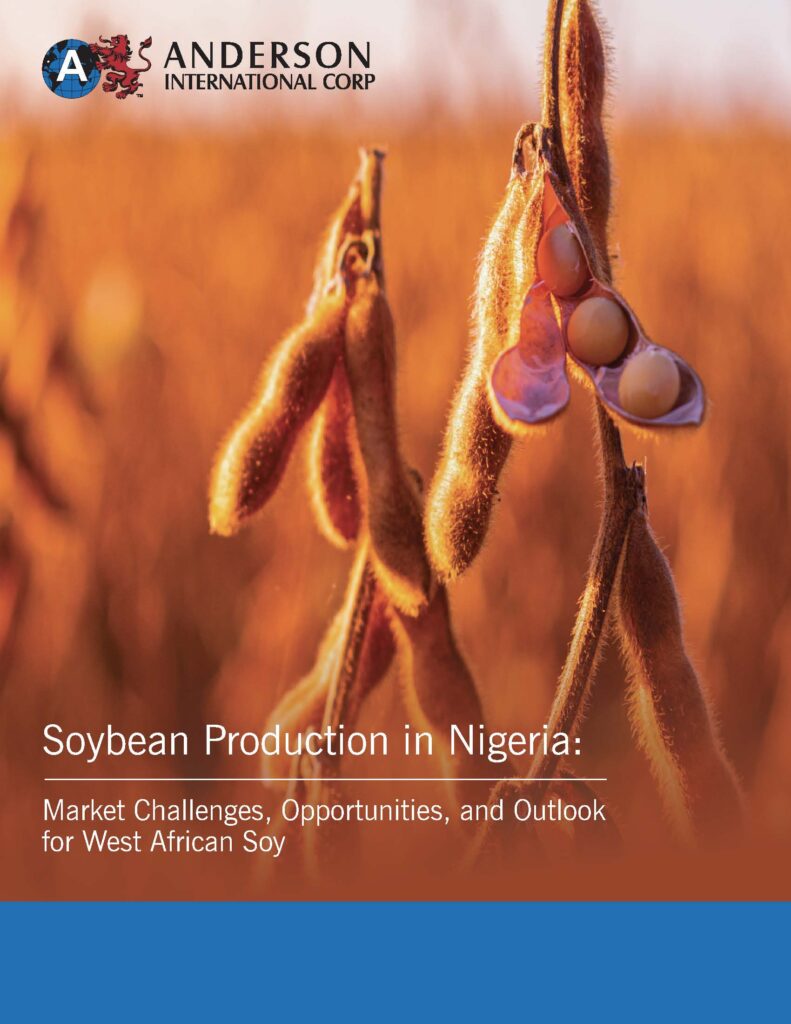
What’s inside the eBook
This guide explores the scientific breakthroughs that have enabled sustainable soybean farming in Nigeria, focusing on the current market dynamics and ambitious investments that will help West Africa overcome barriers to growth and become a key player in the global oilseed economy.

Nigerian soybean acreage expanded rapidly to meet European demand during World War II. Yields reached 1,100 kg/ha, and by 1947, the first exports of 9 metric tonnes were reported.

By 1981, African soybean production had jumped to 265,000 metric tonnes, with Nigeria growing about one-third of this total volume as the nation’s third-largest producer at the time.

The new policy, introduced in 2025, aims to cultivate one million hectares of farmland to add 460,000 MT of soybean output within two years.