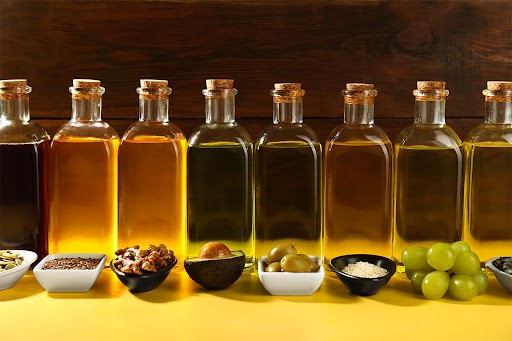
Scroll through social media long enough and you’ll likely encounter a bold claim bashing seed oils as “toxic” or “poisonous,” painting them as the culprit behind chronic disease. Influencers as high-ranking as Health and Human Services Secretary Robert F. Kennedy Jr. warn against the harmful health effects of the so-called “hateful eight” oils: canola, corn, cottonseed, grapeseed, rice bran, safflower, soybean, and sunflower. But are seed oils bad for us, or are there actually seed oil benefits hiding behind these controversial claims?
Decades of scientific research support the latter, suggesting that these edible oils can be part of a healthy diet when consumed in moderation. So, why are seed oils attracting so much scorn? According to many nutrition researchers, seed oils have been demonized because of major misunderstandings. Let’s debunk these myths to reveal the science behind the spite.
What are seed oils, anyway?
As the name implies, seed oils come from the seeds of plants, unlike olive oil or avocado oil, which are made from the fruit itself. Products sold as “vegetable oil” usually contain at least one of the eight seed oils mentioned above—most likely soybean oil, which makes up 60% of the edible oil market in the U.S.
Made primarily of unsaturated fats, each type of seed oil differs in its fat composition [BB1]depending on the specific variety, growing and harvesting conditions, and even how it’s processed. Most seed oils are high in omega-6 fatty acids and low in omega-3 fatty acids—which is one of the misunderstandings we’ll tackle in a minute.
Before vegetable oil hits the market, the oil must be separated from the seed through either chemical extraction or mechanical pressing, which leads us to our first major myth.
Myth #1: Processing makes seed oils bad.
Critics claim that the extraction process makes seed oils bad for our health. To debunk this myth, we need to understand the different types of extraction used to produce seed oils.
Chemical extraction is the most common method used around the world today because it removes almost all the oil from the seed. This process uses chemical solvents like hexane to dissolve fat from the solid seed meal—raising concerns that residual hexane left behind could be linked to serious health conditions.
However, after extraction, hexane is evaporated out of the oil, which then undergoes additional processing to give the product a longer shelf life and higher smoke point. In fact, you’d have to consume 100 times more oil each day to reach even the lowest safety limit of residual hexane—so unless you’re chugging canola oil, solvent extraction shouldn’t be a big health concern.
However, to avoid chemical solvents altogether, look for expeller-pressed oils instead. These oils are extracted in a mechanical expeller press that physically squeezes the seeds to release the oil, which retains much of its flavors and nutrients. Although heat is applied throughout the process to release the oil from the seeds, modern extrusion equipment cooks seeds much more quickly and efficiently before pressing, limiting heat exposure to preserve the nutrients in the oil.
Seed oils can also be cold-pressed by skipping the cooking step and crushing raw seed material—often more than once—resulting in virgin oils that have not been exposed to heat or chemicals.
☑️ DEBUNKED. While expeller-pressed oils avoid chemicals altogether, solvent-extracted seed oils are safe for human consumption.
Myth #2: Beef tallow and butter are better.
Dietary fats generally fall into two categories: saturated fats, found in animal and dairy products like beef tallow and butter as well as tropical oils like coconut and palm, which tend to be solid at room temperature; and unsaturated fats, like most seed oils, which are typically liquid at room temperature.
Saturated fats have been shown to raise LDL (“bad”) cholesterol and increase the risk of heart disease, with evidence dating back decades. Leading health organizations like the American Heart Association recommend swapping out saturated fats for unsaturated fats because of the health benefits they offer.
A recent study followed more than 200,000 people for 30 years, concluding that higher consumption of seed oils was associated with lower risk of cancer and cardiovascular disease, while butter use was linked with increased risk of mortality. In fact, substituting butter with plant-based oils could decrease the risk of premature death by up to 17%, according to the study.
Specifically, healthy seed oil benefits hail from the abundance of essential fatty acids they contain. Linoleic acid, an omega-6 polyunsaturated fatty acid, and alpha-linolenic acid, an omega-3 polyunsaturated fatty acid, are “essential” because humans do not produce them, so we need to get them from food. A slew of scientific research points to the health benefits of linoleic acid:
- One analysis followed nearly 70,000 participants for more than 30 years to find that those with the highest levels of linoleic acid in their blood had a lower risk of developing cardiovascular disease.
- Controlled trials have shown that linoleic acid reduces LDL (“bad”) cholesterol, increases HDL (“good”) cholesterol, and may even lower blood pressure.
- Another meta-analysis revealed that linoleic acid can improve glucose metabolism, indicating that those with the highest levels had a 35% lower risk of developing type 2 diabetes.
And, in case you’re questioning whether studies consider the source of linoleic acid in connection with seed oil benefits, plenty of research highlights the benefits of canola oil for significantly lowering LDL cholesterol and reducing body weight, and the ability of soybean oil to improve cholesterol levels and even reduce the risk of death.
☑️ DEBUNKED. Seed oil benefits have been linked to lower onset of heart disease, diabetes, and death fromall causes.
Myth #3: Omega-6 fats are inflammatory.
The concern about inflammation comes from an oversimplification of the science behind seed oils. The criticism is that the body converts linoleic acid into arachidonic acid, a fatty acid often associated with inflammation. However, research shows that this process is tightly regulated in humans, so consuming linoleic acid does not necessarily raise arachidonic acid levels. A large-scale analysis showed that higher intake of omega-6 fatty acids can actually reduce inflammation, and a meta-analysis of randomized controlled trials confirmed that increased intake of linoleic acid does not increase inflammation.
Other claims assert that linoleic acid may increase oxidative stress, the imbalance of free radicals (unstable molecules) and antioxidants (substances that combat free radicals), which is associated with cellular damage. However, studies show no evidence that linoleic acid increases oxidative stress.
So, why do omega-6 fats get such a bad rap? The inflammation myth stems from a misunderstanding of different polyunsaturated fats. Omega-3 fatty acids play an important role in overall health, from brain health and blood circulation to immune function and anti-inflammatory response. Omega-6 fats offer many of the same benefits, just not as effectively. Somehow, this comparison has been twisted into the misconception that omega-6 fats do the opposite of omega-3 fats, which is simply untrue.
Confusion also surrounds the ideal balance of omega-6 and omega-3 fats, with critics claiming that we should aim for a ratio of 1:1 or even 4:1—a far cry from most modern diets which consume more than 10 times more omega-6 than omega-3 fats. In fact, there’s no scientific consensus on what the optimal ratio should be. Experts suggest that the solution isn’t reducing omega-6 intake, but increasing omega-3 intake through healthy fat sources like walnuts, fish, or—you guessed it—seed oils like canola.
☑️ DEBUNKED. Seed oil benefits include anti-inflammatory properties, contrary to the fat-bashing criticisms of omega-6.
Setting the record straight on seed oil benefits
Part of the reason why so many critics call seed oils bad is because they’re conflating these ingredients with the unhealthy foods they’re commonly found in. Seed oils are practically unavoidable in packaged foods ranging from mayonnaise to potato chips, cakes, and coffee creamers.
Ultra-processed foods, as they’re known, make up an increasing share of the average American diet, with research suggesting that they provide more than half of the calories that adults consume and nearly 70% of the average child’s calories.
Consuming too many ultra-processed foods can increase the risk of developing type 2 diabetes and heart disease, among other chronic conditions. But seed oils aren’t solely to blame for these health risks, since ultra-processed foods are also high in sodium, added sugars, refined carbs, and tons of artificial additives.
Ultimately, most of the claims calling seed oils bad are misguided and poorly informed, as seed oil benefits have been widely documented. From lowering cholesterol to reducing the risk of cardiovascular disease and type 2 diabetes, to anti-inflammatory properties that support overall health with essential fatty acids that our bodies need to function optimally, seed oil benefits abound.
The scientific evidence is clear: seed oils are not the enemy. The solution is not cutting out seed oils altogether, but avoiding ultra-processed foods, eating plenty of fruits and vegetables, and limiting fat intake. No matter which cooking oil you choose, the key to fat consumption is moderation.
Contact Anderson International to learn more about preserving seed oil benefits with mechanical extraction.